
Vietnam Helmet Law for Riders and Passengers: Rules and Fines
As a general rule in Vietnam, both a motorcycle or scooter rider and their passenger should wear a suitable motorcycle helmet with the strap properly fastened. The law sets narrow exceptions to the rider’s offence of carrying an unhelmeted passenger in specific circumstances; it does not exempt the rider from wearing a helmet. Under Decree 168/2024/ND-CP, as amended by Decree 238/2026/ND-CP, the rider can be fined 400,000–600,000 VND for riding without one or with the strap undone, and a separate 400,000–600,000 VND for carrying a passenger who has none. The passenger can be fined 400,000–600,000 VND too. The exemptions are narrow, and none covers the rider.
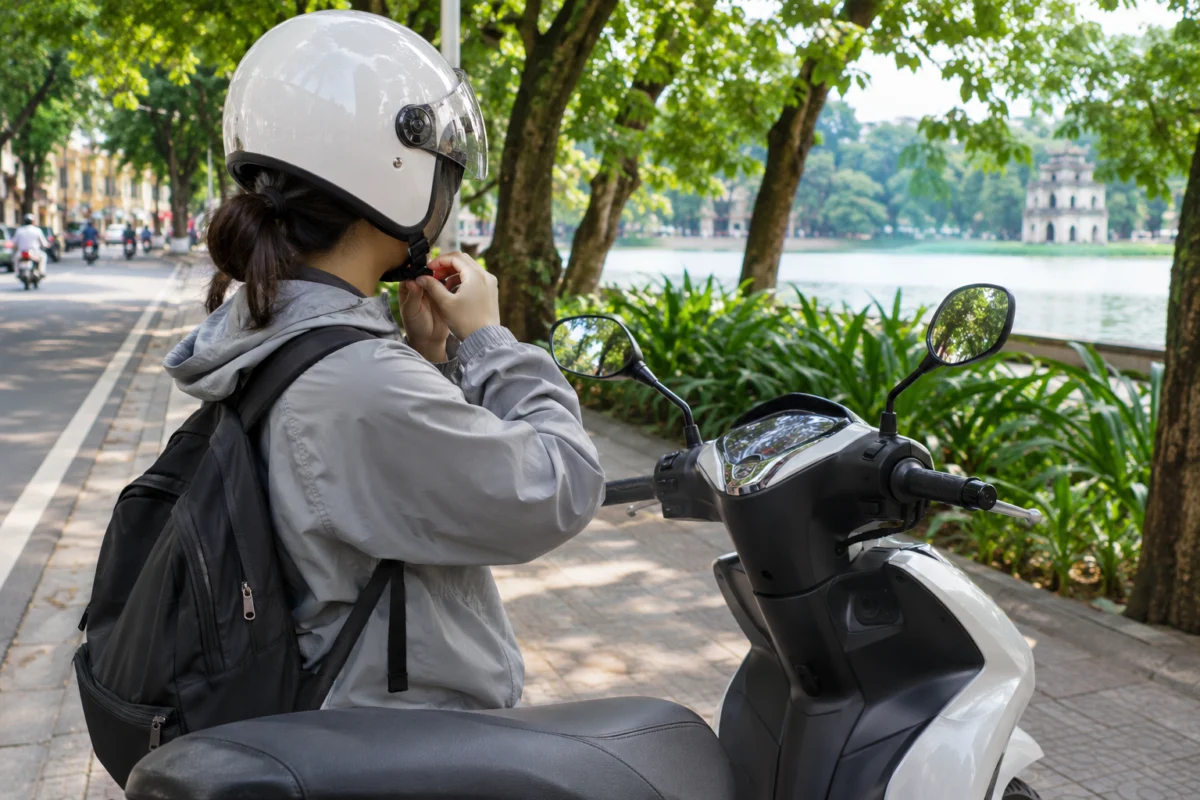
The rule in brief
Riders and passengers wear a fastened helmet
The Law on Road Traffic Order and Safety (Law 36/2024/QH15) has set the rules since 1 January 2025, and Decree 168/2024/ND-CP attaches the fines. For helmets the decree always says “helmet for motorcycle and moped riders” (mũ bảo hiểm cho người đi mô tô, xe máy), worn with the strap fastened properly. The duty covers the person steering and anyone carried, on motorcycles and mopeds alike, including the 50cc automatic scooters that riders aged 16 and over may ride without a license. Skipping the license does not skip the helmet; see 50cc scooter classification and practical limits.
Who is exempt
A rider is not fined for carrying a passenger without a helmet when that passenger is a child under 6, a patient being taken for emergency care, or a person being escorted after breaking the law. These exemptions belong to the carrying offense, Article 7(2)(i); the rider’s own helmet offense, Article 7(2)(h), has none. Details follow below.
Fines: the rider, the passenger, or both
The decree lists three separate helmet offenses, each fined 400,000–600,000 VND. Article numbers follow the decree’s scheme, so Article 7(2)(h) means Article 7, clause 2, point h. The table shows how the offenses combine.
| Situation | Rider | Passenger |
|---|---|---|
| Both wear fastened helmets | None | None |
| Rider’s strap undone | 400,000–600,000 VND (Art. 7(2)(h)) | None |
| Passenger bareheaded or strap undone | 400,000–600,000 VND for carrying them (Art. 7(2)(i)) | 400,000–600,000 VND (Art. 12(5)(b)) |
| Neither wears a helmet | Two offenses, each 400,000–600,000 VND (Art. 7(2)(h), 7(2)(i)) | 400,000–600,000 VND (Art. 12(5)(b)) |
| Passenger is a child under 6, no helmet | None (exempt, Art. 7(2)(i)) | Not spelled out |
Rider without a helmet or unfastened: 400,000–600,000 VND
Article 7(2)(h) covers two things in one sentence: no helmet, and a helmet whose strap is not fastened properly (cài quai đúng quy cách). A helmet resting on your head with the buckle open is the same offense as none. It applies whenever you ride on the road, and the text read for this guide lists no exemption for the rider.
Rider carrying an unhelmeted passenger: 400,000–600,000 VND
Article 7(2)(i) is a second, separate offense against the rider. If the person behind you has no helmet, or has one on with the strap undone, you can be fined for carrying them, whatever happens to their own fine.
Passenger fined separately under Art. 12(5)(b)
Article 12(5)(b) gives the passenger an offense of their own: not wearing a helmet for motorcycle and moped riders, or wearing one with the strap not fastened properly, when carried on a motorcycle or moped. The fine is addressed to the passenger, not the rider. That is the double exposure many summaries miss: one bare head can produce a fine for the passenger and another for the rider who carried them, and a bareheaded rider adds a third. The decree does not say whether officers issue every fine at one stop, and no published guidance was found; see our guides to traffic police stops and Decree 168 motorbike fines. Decree 238/2026/ND-CP, in force since 15 August 2026, did not amend the helmet-penalty provisions discussed here.
Do helmet offenses cost license points?
Short answer: not according to the decree text, though secondary sources disagree.
Why sources conflict
Two answers circulate online: some summaries list helmet offenses among those that cost license points, others describe a money fine only. A likely reason, offered as an inference, is structure. In Decree 168 the fine amounts sit in numbered clauses, while point deductions are listed in a separate clause that refers back to offenses by clause and point number, so a summary that skips those back-references can attach points to the wrong row.
What the full text indicates
In the text of Decree 168/2024/ND-CP read for this guide, Article 7’s points clause lists the offenses that cost 2, 4, 6 or 10 points. The rider’s helmet offenses, Article 7(2)(h) and (i), are not among them, and Article 12(5), which holds the passenger’s fine, shows no points. Decree 238/2026/ND-CP did not amend the helmet-penalty provisions discussed here. On that reading, a helmet offense costs money, not points.
This is a reading of the published text, not a statement from the traffic police, so confirm against the current consolidated text if it matters. To check, find the points clause in Article 7: points h and i of clause 2 are absent.
Exemptions in detail
Children under 6
The exemption stops at 6: a child under 6 is five or younger, so a 7-year-old on the back needs a fastened helmet and the rider can be fined for carrying one without. Do not confuse this with the passenger-count rule, where carrying two passengers is fined 400,000–600,000 VND unless an exception applies, such as a child under 12; that exception concerns how many people ride, not helmets. Being exempt from the fine does not make a bare head safe. Child-size helmets exist, and an adult helmet that slides around on a small head protects little.
Emergency patients and escorted persons
The other two exemptions describe specific situations, not types of traveler. One is a patient being taken for emergency care; a routine clinic visit is not what the words describe. The other is a person being escorted after breaking the law, a matter for the authorities. For almost every reader, the practical number of exemptions is zero. They are written into the rider’s carrying offense, Article 7(2)(i); Article 12(5)(b) does not repeat the list in the text read, and no guidance on how officers read the two together was found, so do not rely on an exemption to skip a helmet.
What counts as a proper helmet
Vietnamese standard and the CR mark
The decree provisions read name a “helmet for motorcycle and moped riders” without describing one. The technical requirements are set by the national regulation QCVN 2:2021/BKHCN, issued with Circular 04/2021/TT-BKHCN of the Ministry of Science and Technology. Since 1 January 2024, helmets for motorcycle and moped users made in or imported into Vietnam must meet it before they are put on the market; stock certified under the earlier rule and already in circulation could stay on the market until the end of 31 December 2024. A new helmet bought in Vietnam today should therefore comply.
Compliant helmets carry the CR conformity mark (dấu hợp quy), but the marking rules sit in appendices that the English translation checked for this guide does not include, so no label checklist is given. No separate fine for a non-compliant helmet was found, and the decree text read does not say the CR mark is needed to avoid the no-helmet fine. Choose a helmet with the CR mark and ask the seller which ones it supplies.
Fastening and fit
All three offenses cover a strap that is not fastened properly, so the buckle matters as much as the shell. Fasten it on every ride, check that the helmet sits level and snug and does not shift when you shake your head, and give a passenger the same check. Checking fit, condition and markings in depth is a topic for its own guide.
Half-face vs full-face for city riding
The decree provisions read use one term for every helmet, so a half-face or a full-face helmet can qualify if it is certified and fastened. A half-face helmet is cooler in Hanoi’s hot, humid months and quicker to put on; a full-face helmet also covers the jaw and face but runs hotter, which pays off on faster rides. In rain, a clear visor or clear glasses matters more than the shape.
Helmets and your insurance
Helmet conditions in travel policies
A fine is not the only consequence. Travel insurers attach conditions to motorbike cover, and World Nomads is a useful example because its help page states them plainly. The page, last updated in February 2024, says to “wear a helmet (it’s a requirement of your travel insurance cover) even if it’s not the law in the country you’re in”, lists not wearing one among its exclusions, and requires a valid license for that class of motorbike at home. Theft of or damage to the bike is not covered. So will travel insurance pay if you were not wearing a helmet? Not under a policy with that exclusion. The page is a summary, and World Nomads was acquired by IMG in October 2026, so read the current policy wording; other insurers set their own conditions and none was checked. Our travel insurance guide covers the checks.
Why the passenger’s helmet matters too
The same page tells passengers to wear a helmet and says passenger cover depends on the rider holding the appropriate valid license; its example is a xe om, a motorbike taxi, in Hanoi. A bareheaded passenger therefore risks a personal fine and a weaker position with the insurer. Vietnam’s compulsory motor insurance does not close the gap, because it covers third parties, not the rider; see compulsory vs travel insurance.
Helmets with a rental scooter
Law and insurer rules are covered above. What helmets come with your rental is between you and the shop; HANOI MOTO arranges helmets by agreement, so ask before collection. See how to rent a motorbike in Hanoi and the motorbikes page for the steps and the fleet.
What to ask about helmets when booking
- How many helmets come with the rental, and do they cover a passenger?
- Which sizes exist, including a child size for a passenger aged 6 or older?
- Do they carry the CR mark, and are the shell, strap and buckle in good condition?
- What happens if a helmet is lost or damaged?
- Is all of this in the rental agreement? Photograph each helmet at handover, as you would the bike.
Bringing your own helmet
A helmet you own fits and has a history you know. The sources checked do not say how officers treat a helmet certified abroad that lacks the CR mark; no rule was found accepting it, and none forbidding it. A proper motorcycle helmet, not a cycling or sports helmet, that fastens securely is the sensible baseline, and the World Nomads page lists bringing one from home as an option. Plan a second helmet for any passenger.
When you inquire through the HANOI MOTO contact page, on Zalo at +84 857 255 868 or by email to motoopen12@gmail.com, tell HANOI MOTO how many riders and passengers need helmets, including any children, and ask what helmets come with the rental.
Frequently asked questions
If my passenger has no helmet, who gets fined?
Both can be. The rider faces 400,000–600,000 VND for carrying an unhelmeted passenger (Article 7(2)(i)), except in the three exempt cases, and the passenger faces 400,000–600,000 VND (Article 12(5)(b)).
Does a 7-year-old need a helmet on a scooter?
Yes. The exemption covers children under 6 only, so from the sixth birthday a passenger needs a fastened helmet, and the rider can be fined for carrying a child without one.
Is riding with the strap undone the same offense as no helmet?
For fine purposes, yes. Article 7(2)(h) puts both in one point, and Articles 7(2)(i) and 12(5)(b) treat a passenger’s helmet the same way.
Do helmet offenses deduct points from a license?
Not according to the decree text read for this guide: Article 7’s points clause omits points h and i of clause 2, and Article 12(5)(b) carries no points. Secondary sources disagree, so check the current text.
Can I wear a bicycle helmet on a scooter in Vietnam?
It is a poor bet. The decree speaks of a helmet for motorcycle and moped riders, and a cycling helmet is built for bicycle speeds and is unlikely to carry the CR mark. No rule about cycling helmets on scooters was found, so an officer may treat it as no helmet. Wear a certified motorcycle helmet.
Sources and last checked
Rules and amounts were checked in November 2026; confirm anything that matters against the current text.
- Thu Vien Phap Luat, Decree 168/2024/ND-CP, penalties for administrative violations in road traffic safety, accessed November 2026
- Thu Vien Phap Luat, Decree 238/2026/ND-CP, amendments to Decree 168/2024/ND-CP, accessed November 2026
- LuatVietnam (English translation), Circular 04/2021/TT-BKHCN, national technical regulation on protective helmets (QCVN 2:2021/BKHCN), accessed November 2026
- World Nomads, Riding a motorbike or scooter (help page, last updated 15 February 2024), accessed November 2026
Part of the guide: Rental Documents, Licenses and Insurance Questions
Conversation