
Riding Preparation Guides for Hanoi Motorbike Renters
Prepare documents, handover checks and a realistic riding plan for Hanoi. Use the rental process and pre-ride guides before accepting a motorbike.
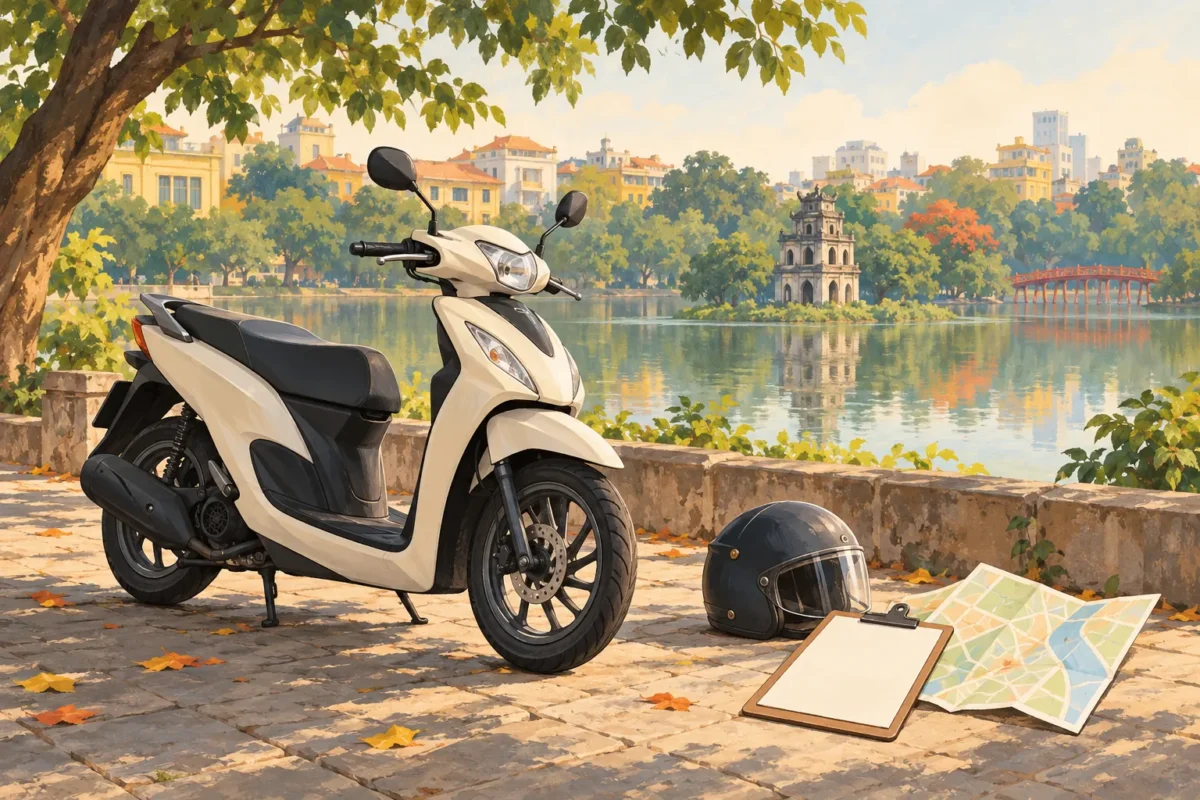
Prepare for a Hanoi motorbike rental in a clear order: describe the journey, verify the prerequisites for the actual rider and vehicle, review the offer, inspect the bike and agree the return. This collection organizes those steps so that an available bike is only one part of the decision.
Use the document guides before committing to a ride and the practical checklists before collecting the vehicle. Current HANOI MOTO policies and contact arrangements need direct confirmation. The collection does not certify riding entitlement, insurance cover or a vehicle’s mechanical condition.
Choose your preparation guide
| Stage | Collection | What to prepare |
|---|---|---|
| Before agreeing a rental | Rental documents and license questions | A list of requirements for your documents and the actual vehicle |
| Before collection and a proposed outing | Riding preparation and day-trip guides | Handover checks, route questions and an alternative transport plan |
Keep four decisions separate
The operator confirms its vehicle allocation and rental terms. The relevant authorities establish the legal requirements. Your insurer explains the conditions of your policy. You assess whether your experience, condition and comfort fit the proposed journey.
Ask the right party about each question. An operator’s willingness to rent does not settle legal entitlement or insurance. Equally, having suitable documents does not mean you must ride when you are tired, uncomfortable with the traffic or uncertain about the bike.
Keep unanswered essentials visible. If a prerequisite remains unresolved, organize other transport while checking it. This avoids turning a booking deadline into pressure to make a riding decision without the information you need.
Identify the actual vehicle before checking documents
Ask which vehicle is proposed and obtain the details needed to establish its registered classification. A name in an advertisement may not identify the exact version. Labels such as scooter, 50cc or electric are not a complete document check.
For your own documents, check current official information that applies to your circumstances and the vehicle. Note the issuing jurisdiction, relevant categories, validity and any accompanying document requirement that needs confirmation. Use the details privately when seeking advice rather than posting identity documents in a public discussion.
Use dated official information when checking requirements. Identify the rule that applies to the vehicle and your circumstances, and seek clarification from the responsible authority if an answer is uncertain. Resolve those questions before committing to ride.
Review insurance separately from the rental offer
Ask your insurer whether the proposed rider, vehicle and use meet the policy conditions. Describe the actual journey and the documents you intend to rely on. A broad statement that a trip has travel insurance does not answer every question about riding a motorbike.
Ask the operator which vehicle documents or cover are supplied and what the agreement says about damage, theft and third-party claims. Keep its answer alongside, but separate from, your insurer’s response. Do not infer that an included item covers every loss or that a deposit caps your responsibility.
Retain the relevant contact and claim instructions in your private travel record. If the answer is unclear or unavailable, treat cover as unresolved while deciding whether to proceed with the ride.
Turn the offer into a collection checklist
Before collection, confirm the vehicle, period, full rent, separate deposit, documents, equipment, permitted use and return process. Keep the final accepted version of the offer. Add the exact meeting point and the person authorized to conduct the handover.
Ask about maintenance, fault reporting and repair authorization before those arrangements are needed. Record the contact channel and any stated service limitations. A phone number alone does not establish free recovery, replacement transport or a round-the-clock service.
Use the rental document checklist to organize what to bring. Ask why sensitive information is necessary and how to supply it through a verified channel. Keep payment receipts separate from copies of identity documents.
Inspect and record the handover
| Area | Record or ask | If something is unclear |
|---|---|---|
| Vehicle identity | Bike identifiers and the agreement reference | Resolve a mismatch before accepting |
| Visible condition | Clear photographs and existing marks | Ask for the condition record to be acknowledged |
| Controls and equipment | Starting, switches, locks and supplied items | Request an explanation on the actual vehicle |
| Safety concerns | Anything unusual, damaged or difficult to operate | Ask for assessment and resolution before use |
| Return process | Point, deadline, fuel condition and inspection | Confirm the arrangement in writing |
Use the pre-ride inspection article as an observation checklist. It cannot replace a qualified mechanical assessment. Do not accept an unresolved safety problem simply because the handover is taking longer than expected.
Make the first journey manageable
Choose a first destination that fits your existing experience and leaves time for an unhurried departure. Set navigation while stopped, organize the equipment and check the destination’s parking arrangements. Avoid combining an unfamiliar bike, tight timing and complicated luggage in the first ride.
If you need instruction or cannot operate the vehicle confidently, pause the collection decision and discuss alternatives. The rental handover should not be treated as proof that you are ready for every traffic situation. Choose another transport arrangement when that better fits your skills or condition.
Keep a practical plan if mobile data, the primary phone or the preferred meeting arrangement fails. Have access to the operator contact and return instructions. A prepared record is useful when plans change and you need to explain the existing agreement.
Assess an outing beyond the routine city journey
For a proposed day trip, confirm the operator’s permission for the route and the suitability of the allocated bike. Review the distance, stops, weather, daylight and a realistic turnaround point using current information. A place appearing on a travel list does not establish a suitable route for every rider.
Allow for the return deadline and your own energy later in the day. Choose the plan with room to stop, shorten the outing or use other transport if conditions change. Do not treat an itinerary’s estimated travel time as a commitment to keep riding.
Detailed destination access, opening times, entry conditions and legal route restrictions need current verification in the relevant trip article. This collection supplies the decision sequence without inventing those details or assuming that HANOI MOTO offers touring support.
Keep the return process in your plan
Review the return point, time, equipment and fuel condition before the final day. Ask about a change as soon as it becomes necessary and wait for acceptance. Allow time for inspection and deposit reconciliation before onward travel.
At settlement, compare the agreed record and request an itemized explanation of adjustments. Keep the return acknowledgment and receipt for any deposit payment or amount pending. Add the final outcome to the rental record so the arrangement is clearly closed.
Supporting articles and related collections
- Before you ride: a rental decision guide: organize entitlement, experience and agreement questions.
- Documents to confirm before collection: prepare the operator inquiry and private record.
- Pre-ride motorbike inspection checklist: record observations and unresolved concerns.
Continue to vehicle selection for fit and control comparisons, rental planning for the period and handover, or cost planning for the written quote and deposit.
Frequently asked questions
Does a rental agreement prove I may legally ride?
Check legal entitlement separately for the rider and actual vehicle. Ask the operator about rental conditions, the relevant authority about legal requirements and your insurer about cover.
Can I check insurance after collecting the bike?
Resolve the applicable conditions before deciding to ride. Give the insurer the actual vehicle and intended-use details rather than relying on a general assumption about travel cover.
What if I notice a problem during handover?
Record the concern and ask the operator to assess and resolve it before acceptance. If the bike remains unsuitable or a safety issue is unresolved, organize a different arrangement.
Is a day-trip itinerary enough to approve the route?
Check the operator’s permission, current route information and your own capability. Adjust or abandon the outing if the practical conditions do not fit.
Prepare the rental process
Use the rental process checklist to organize your preparation, then send your dates, preferred vehicle and handover request through the HANOI MOTO contact page. Keep unresolved prerequisites on the list until the responsible party has provided an answer.
Illustration: AI-generated editorial artwork. It does not document HANOI MOTO premises or current fleet.
Return to all Hanoi motorbike rental guides
Latest articles in this collection
- Riding in a Group in Hanoi: Staying Together, Signals and Regrouping Points
- Slippery Surfaces on Hanoi Roads: Painted Lines, Manholes, Wet Tiles and Fresh Cement
- Sunrise and Sunset Scooter Rides in Hanoi: Where to Go, When to Leave and When to Be Back
- Mirrors, Blind Spots and Shoulder Checks on a Scooter in Hanoi Traffic
- Emergency Numbers and Who to Call While Riding in Vietnam: Police, Ambulance and the Rental Shop
- Roadside Scooter Repair Shops in Hanoi (Tiem Sua Xe): Puncture Fixes and What to Ask Before Paying
- Riding National Highways in Vietnam: Trucks, Buses, Overtaking and Rest Stops
- Headlights, Indicators and Hazard Lights in Vietnam: When Motorbikes Must Use Them
- Bus Lanes, the BRT Lane and Truck-Ban Hours in Hanoi: Restricted Lanes for Scooters
- Horns, Lights and Signals: How Hanoi Riders Communicate and What to Copy or Avoid
- Apps for Riders in Hanoi: Maps, Grab, Zalo, Traffic Fine Lookup and Weather Alerts
- Lang Son and Mau Son From Hanoi by Motorbike: Northeast Route and Border-Area Cautions