
Photographing a Rental Scooter at Pickup: Records That Hold Up
To document scooter damage before renting, photograph the whole scooter in a fixed order, film one continuous walkaround, and send both to the shop before you ride away. Eight wide shots, close-ups of every mark, the tires, the dashboard, the keys and the papers give you a set to point to if condition is ever questioned. A sent message carries its own time, and a reply from the shop acknowledges the set. If you spot damage after pickup, stop somewhere safe, photograph it and message the shop at once.
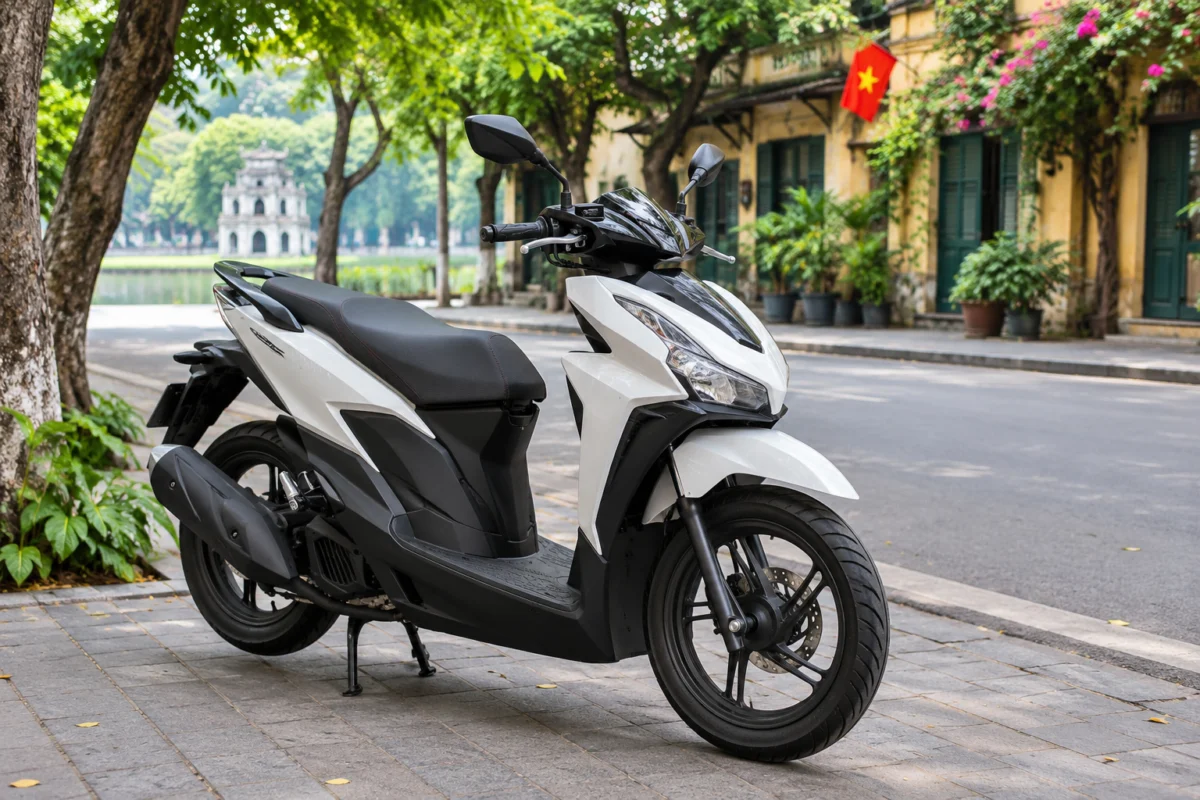
Why a condition record matters for your deposit
Condition is hard to settle from memory. On any motorbike rental, a dated record gives both sides the same starting facts.
Refunds follow the conditions in your agreement
At HANOI MOTO the deposit is reconciled and returned under the agreement when the bike comes back. The shop’s rental, deposit and refund conditions page does not assume an unconditional refund or the same deadline for every rental, and it says to record condition, existing marks, fuel or battery level, keys and accessories at collection. Damage assessment and deductions follow your agreement. A condition record gives you facts to point to when those terms are applied.
What a record can and cannot prove
A useful photo answers four questions: which scooter (the plate), where on it (a wide frame), how big (a close frame) and when (a dated file or message). Done well, a set shows that a mark existed at pickup, what the dashboard read and what came with the bike. It cannot show how a new mark happened, whether a hidden part is sound or who is responsible for damage that appears later. A blurry shot proves little, and a set the shop never saw is easier to question than one it acknowledged.
Set up before you shoot
Handover by appointment: allow enough time
HANOI MOTO hands scooters over by appointment at 114 Nguyen Van Cu, Bo De Ward, and the shop is open 09:00 to 21:00 daily. Pick a slot when you are not racing a train or a hotel check-in, ask the shop how long to allow, and see how renting works for the booking steps. Tell the shop you plan to photograph and film, charge your phone, free up storage and set the date and time to update automatically.
Shooting at a hotel, at night or in rain
A hotel handover, including its coverage, fees and times, is by agreement; see pickup and delivery, and the hotel handover checklist for the delivery day. Wherever you meet, choose the spot in advance: level ground, good light, ideally a roof. After dark, hold the phone torch low and to the side so scratches catch the light. In rain, shoot under cover and wipe the lens; water beads hide marks and glare ruins close-ups. If light or weather defeats you, say so in writing and agree to recheck in daylight.
The shot list in order
Use the same order every time so the return set can match it frame for frame.
- Circle the scooter: eight wide shots, rear plate readable
- Plate close-up
- Every existing mark, wide then close
- Panels, lenses, mirrors, levers, seat, floorboard
- Both tires, both wheels, visible brake parts
- Dashboard, ignition on, then engine running
- Keys, smart key fob, helmets, extras
- Registration and insurance papers
- One continuous video walkaround
Four corners and both sides with the plate visible
Treat the scooter as a clock face, front at 12 and rear at 6. Stand two or three steps back and shoot at 12, 1:30, 3, 4:30, 6, 7:30, 9 and 10:30, phone at seat height, whole scooter in frame. The rear frames must show the number plate sharply enough to read; add one frame filled by the plate alone. That covers the four corners and both sides, and the wide frames let you place every close-up later.
Close-ups: panels, mirrors, seat and floorboard
Give every mark the wide-plus-close treatment: one frame showing where it sits, one near enough to show length and depth, with a fingertip beside it for scale. Look hardest where scooters meet the ground or a wall: lever and mirror ends, handlebar ends, lower side panels, the exhaust guard and the footrests. Then cover the seat, floorboard, light lenses and rear rack. If a panel is too dirty to judge, photograph it anyway and say so.
Tires, wheels and brake discs
Shoot each tire’s tread and both sidewalls, then each rim, recording what is visible: cracks, bulges, tread worn smooth, nails, bent or scraped rims. Photograph the front brake disc if there is one; a drum brake cannot be seen. Whether tires and brakes are safe is a separate check.
Dashboard: odometer, fuel and warning lights
Switch the ignition on and photograph the whole dashboard, then the odometer in kilometers, the fuel needle and any warning light that stays lit. On an electric model, capture the battery percentage and any range figure. Repeat with the engine running. These frames fix the starting point for any fuel terms you agreed.
The video walkaround
One continuous take with spoken notes
Video adds the sequence and sound that stills lack. Open on the plate, then say the date, your name, the plate number and the odometer reading aloud. Walk the same clock circle slowly, phone held sideways, pausing on each mark to describe it: ‘scratch, lower left panel, about a finger long.’ Say what is fine too: ‘right mirror intact.’ Crouch for the lower panels, lift the seat to show the compartment and do not cut the take. Two to four minutes is enough for a rental motorbike.
Engine start, lights and horn on camera
Film the dashboard as you start the engine, then the headlight on low and high beam, each indicator and the horn. Press the brake lever and film the tail light, or film its reflection in a window if you are alone. Say anything odd out loud: a rattle, a flicker, a dead indicator. What each check means, and when to stop and report a fault, is in the pre-ride inspection guide.
Photographing papers, keys and accessories
Registration and insurance certificates
Ask which papers travel with the scooter; document handling is by agreement with the shop. If you receive the registration certificate (the cà vẹt) or a copy, and an insurance certificate, photograph each page flat and in focus, with the plate number and expiry dates readable. Check that the plate on the paper matches the scooter and that the dates cover your rental. Photograph your signed rental agreement and any deposit receipt too.
Keys, smart key fob and helmets
Photograph every key you receive, laid on the seat, and state how many in your message. For a smart key, shoot the fob front and back and note any cracked casing. For each helmet the shop gives you, photograph the shell, lining, strap, buckle and visor. Add any extra that comes with the scooter, such as a lock, a phone holder or a rain poncho.
Making the record count
Send the set to the shop before riding off
Ask the shop how it wants the set sent; HANOI MOTO’s published channels are Zalo on +84 857 255 868 and email at motoopen12@gmail.com. Share the scooter-condition photos and video while you are still at the handover, but keep copies of identity papers, contracts and other sensitive documents private unless needed through an agreed secure channel; the message timestamp can help document when the condition set was shared. Add one line with your name, the plate, the date and ‘condition at pickup.’ Many chat apps compress photos and may strip file details, so keep the originals and email a link if the video is too large.
Agree the noted marks in writing
Before you ride, check that each mark you found is written down where you both can see it: on the shop’s condition sheet if it uses one, or in your message with a request to confirm. Whether HANOI MOTO uses a written condition sheet, a photo exchange or another method at handover is something to ask when you book, so do not assume. A signature on a sheet, or a reply such as ‘received, marks agreed’, serves as acknowledgment. If the shop will not confirm, send the set anyway and keep the chat.
Back up the files
Copy the originals to cloud storage or a second device the same day, unedited, and keep the chat thread. Delete nothing until the deposit is back in your hands and no question about the scooter is open.
If you find damage after pickup: stop and document it
A mark you do not recognize is not automatically your fault or the shop’s; acting early, calmly and in writing helps most.
Stop safely and photograph it where you are
Pull over somewhere safe. If the damage touches the brakes, steering, tires or lights, switch off and do not ride on. Photograph the mark wide and close, then the whole scooter, the dashboard with odometer and fuel, and something that fixes the place, such as a shopfront or street sign. Note the time, then compare the mark with your pickup set: find the same panel and angle. If it is there, you have your answer; if not, say so honestly and do not guess how it happened. If a fall or collision caused it, treat it as an accident first: see what to do after a scooter accident.
Message the shop straight away
Send the photos with a short factual note and ask what the shop wants you to do next. Procedures for breakdowns and damage are by agreement with HANOI MOTO, so ask rather than assume, and keep the reply. A prompt report also shows you were open about it. A message you can adapt:
Hello, this is [name], renting the scooter with plate [number]. At [time] on [date] I noticed [what] on the [part of the scooter] near [place]. The odometer reads [km]. It [is / is not] visible in my pickup photos. Photos attached. How would you like me to proceed?
Do not repair it yourself
Do not buff out a scratch, glue a panel, swap a part or visit a roadside repair stall before the shop agrees. A repair erases the evidence, can create a second problem, and your agreement may not permit it. If the scooter is unsafe, stop riding and ask the shop how to bring it back; that arrangement is made at the time, by agreement.
Using the same record at return
Repeat the shot list
Run the same list in the same order, in similar light and from the same distances, finishing with the dashboard. Photograph the odometer, the fuel or battery level and any new mark, wide and close. Send the return set to the shop before you leave and ask how the deposit refund will proceed under your agreement.
Comparing before and after sets
Put the two sets side by side on your phone and go through them with the shop, panel by panel. Anything in both sets is not new. A mark only in the return set is the one to discuss, and if an adjustment is proposed, the conditions page suggests asking for the reason, the amount and the basis under the agreement. The guide to damage charges, assessment and evidence goes deeper.
When you arrange your handover with HANOI MOTO through the contact page, on Zalo at +84 857 255 868 or by email to motoopen12@gmail.com, ask how the condition record will be shared and noted.
Frequently asked questions
Does the shop need to agree with my photos for them to count?
No, but agreement makes them far more useful. Photos only you hold are your own notes; photos the shop has received and answered are shared facts. If it will not confirm, send them anyway and keep the chat and the original files.
How many photos are enough at pickup?
Enough to cover every side twice: eight wide shots, a wide and a close frame for each mark, then tires, dashboard, keys, helmets and papers. As a rough guide, that is 30 to 40 photos plus a video of two to four minutes. A spotless scooter needs fewer, a worn one more.
What if I only notice a scratch the next morning?
Compare it with your pickup set first. If the same panel shows the mark, send that photo to the shop and say it was already there. If not, report it that day with photos and the time you noticed it, and do not guess the cause.
Should I record the fuel level and odometer?
Yes. Photograph the dashboard with the ignition on and again with the engine running: the odometer in kilometers and the fuel needle, or the battery percentage on an electric model. HANOI MOTO’s conditions page lists fuel or battery level among the things to record at collection.
Can I use the photos in a deposit disagreement?
Yes, as supporting evidence alongside your agreement and your messages with the shop. They show condition at the start but do not decide the outcome, which follows the agreement. Keep the originals, show both sets side by side and stay factual.
Sources and last checked
This guide gives practical evidence advice and cites no statute. Business details were owner-confirmed on 1 November 2026; confirm times and terms when you book.
- HANOI MOTO, HANOI MOTO Rental, Deposit and Refund Conditions, accessed November 2026
- HANOI MOTO, Contact HANOI MOTO (address, opening hours, Zalo and email), accessed November 2026
Part of the guide: Rental Documents, Licenses and Insurance Questions
Conversation