
How to Refuel a Scooter in Hanoi: Seat Release, Fuel Cap, Petrol Stations and Roadside Sellers
To refuel a rental scooter in Hanoi, switch the engine off, park on the stand, open the fuel filler (on many automatics it sits under the seat, on others behind a flap on the body), tell the attendant how much you want, let them fill, and pay. Choose a proper petrol station over a roadside bottle whenever you can, never refuel with the engine running, and ask your rental shop before the first fill which fuel it wants in that exact bike. This guide covers only the physical procedure and station etiquette; fuel types, current prices and range live in our fuel guide for rental scooters.
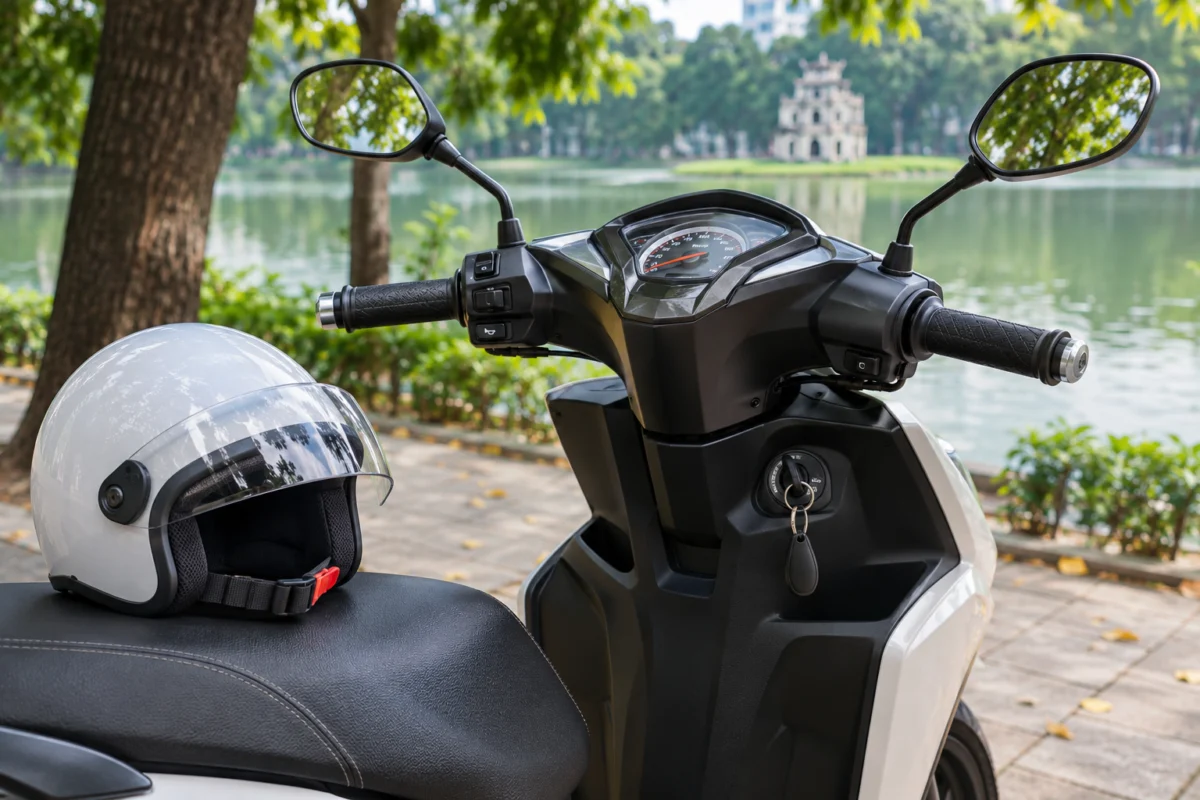
Refuelling looks trivial until you are standing at a pump with a key that will not open anything, an attendant waiting and a queue of riders behind you. Most first-timers do not fail at the fuel, they fail at the small mechanics: which key does what, where the cap is hidden, what to say and when to pay. Everything below is written for a short-stay visitor on a Honda or Yamaha automatic, the kind of bike described on the automatic scooter rental page.
Before you reach the pump: what to check at handover
The cheapest time to learn your bike’s fuel system is while the shop is still standing next to you. The pre-ride inspection checklist already asks you to look at lights, brakes and tires; add four fuel questions to that routine.
- Where is the filler? Ask the staff to open it once while you watch. Do not assume the layout from a bike you rode before.
- Which key position opens it? Some bikes need the key turned to a seat or fuel-cap symbol, some use a button or a pull lever, and some open with the plain key in the lock.
- Which fuel does the shop want? Ask for it in plain words and, if it matters, ask them to write it down (see the E10 and E5 section below).
- How full is the tank now, and how should it be when you return? Fuel level at pickup and return is a matter for your rental agreement. Photograph the gauge at pickup so both sides agree on the starting point. Our guide to returning a rental scooter covers the handback side.
Honest limit: this article cannot tell you the exact cap position of the bike you will be given, because layouts differ between models and model years, and HANOI MOTO publishes no per-model fuel-cap list. A thirty-second demonstration at handover beats any written description.
Locate the fuel cap and seat release on a typical automatic
Automatic scooters made by Honda and Yamaha follow one of two broad layouts. Whichever you have, the rule is the same: identify it while the bike is parked and the engine is off.
| Layout | How to open it | Common beginner mistake |
|---|---|---|
| Filler under the seat | Park on the center stand if the bike has one, turn the key to the seat-release position or press the seat button, lift the seat and unscrew the cap in the storage compartment area. | Pulling the seat up while sitting on it, or forgetting the helmet and bags stored underneath. |
| External filler flap or cap on the body | Turn the key to the flap symbol or press or pull the release, lift the flap, then unscrew the cap. | Forcing a flap that is not released, which can break the latch. |
| Key-lock cap | Insert the key straight into the cap lock and turn, then lift off the cap. | Turning the wrong way and assuming the cap is stuck. |
Step by step at the pump
- Pull in slowly and stop where the attendant or the pump layout indicates. Many Hanoi stations are compact, with bikes angled in close to the pump.
- Switch the engine off and put the bike on its stand. Do not leave it running “just for a moment”.
- Dismount fully. If you have a passenger, ask them to get off too.
- Open the filler with the method your shop showed you. If the seat must be lifted, take anything valuable out of the storage first.
- Say how much fuel you want (phrases below). Let the attendant handle the nozzle unless the station is clearly self-serve.
- Watch the amount being filled. Stop at the filler neck; do not ask for the tank to be topped up to the brim and then squeezed further.
- Close the cap firmly until it seats, close the flap or lower the seat until it latches, and wipe up any spill.
- Pay, take your change, then restart the bike only once you have moved away from the pump area.
If the cap will not open after two careful tries, stop. Forcing it risks a broken latch or lock that the shop may charge for under your agreement. Call the shop, or see our rental scooter breakdown guide for what to do when the bike itself is the problem.
Petrol station versus roadside bottle: safety and quality
In Hanoi you will see two ways to buy petrol. Branded stations have pumps, signage and usually a person who fills the tank for you. Small roadside sellers, often at a shop front, sell petrol from bottles or small containers and pour it into the tank through a funnel. Both exist because millions of motorbikes need small amounts of fuel at any hour.
| Point | Petrol station | Roadside bottle seller |
|---|---|---|
| Fuel labeling | Grades are displayed on the pump and posted at the station. | Usually no grade shown; you rely on the seller. |
| Measuring | Metered pump. | Measured by bottle, so you cannot verify quantity the same way. |
| Spill and fire risk | Designed for fuel handling, though still hazardous. | Open containers, funnels and nearby traffic make spills more likely. |
| Best use | Your default choice for every fill. | Only as a last resort if you are nearly empty and no station is close. |
The practical advice is simple. Use a station for the first fill and for every fill when one is reachable. A roadside seller is a fallback, not a plan: you cannot easily check grade or quantity, and if the fuel is poor the problem becomes yours to explain to the rental shop. If you do use one, keep the engine off, make sure the seller is not smoking, hand over the key position you need, and do not accept a bottle that looks cloudy or contains visible water or dirt. If the bike coughs or stalls soon after a roadside fill, do not keep restarting it; stop somewhere safe and contact your shop.
This article makes no claim about the share of roadside petrol that is poor quality. We have no verified figure, and many sellers are perfectly honest. The point is that you have fewer ways to check.
What to say to the attendant
Attendants at most stations are used to foreigners, and pointing and showing a note usually works. A few short phrases make it smoother. Vietnamese is tonal, so treat the spelling below as a prompt for pointing or showing your phone rather than a pronunciation lesson. Our longer list of Vietnamese phrases for renting a scooter covers the rental counter as well.
| What you want | Vietnamese | Plain-English fallback |
|---|---|---|
| Fill the tank | Đổ đầy | Show the gauge and say “full, please”. |
| A set amount, for example 50,000 VND | Đổ 50 nghìn | Hold up the note or type the figure on your phone. |
| Petrol | Xăng | Point at the fuel icon on the cap. |
| How much is it? | Bao nhiêu tiền? | Point to the pump display. |
| Thank you | Cảm ơn | A nod and a smile. |
Naming a money amount is often easier than asking for litres, because small scooter tanks take a modest quantity and you stay in control of the spend. The attendant does the arithmetic from the pump. Do not read these phrases as official instructions from HANOI MOTO; they are everyday language tips.
E10 and E5 labels: check the manual or ask the shop
Vietnam is moving its mainstream petrol to a bioethanol blend. Under Circular 50/2025/TT-BCT, unleaded petrol sold from 1 June 2026 is to be blended as E10 (petrol with ethanol), and E5 RON92 may still be sold until the end of 2030. Petrolimex, for example, lists E10 RON95 products. In practice a Hanoi pump may be labeled E10 RON95, E5 RON92 or similar, so read the label rather than guessing.
What we could not find is manufacturer guidance from Honda Vietnam or Yamaha Vietnam telling renters which grade a given scooter model should use. So the safe procedure is: check the owner’s manual if the bike has one, or ask your rental shop which grade and label to choose, and do it before your first fill. Ask for the answer in writing or as a message you can show an attendant. The fuel guide explains the fuel types and current price handling in more detail, and prices change with each adjustment period, so we do not list any here.
Whatever grade you pick, do not mix in anything from a bottle “to stretch” the tank, and do not use diesel or any fuel not sold as petrol. If the pump offers something you do not recognize, ask the attendant to show you the one that matches your shop’s instruction.
Payment and receipt habits
The usual pattern at a Hanoi station is that the attendant fills the tank and you pay at the end, either to the same person or at a counter. Station rules can differ, and some places ask for payment first, especially at busy or small stations, so follow what the attendant tells you rather than assuming. At a roadside seller you normally pay on the spot as the fuel goes in.
- Carry small notes. Break large notes at a shop earlier in the day so a modest fill does not require change from a 500,000 VND note.
- Check the pump display against what you pay. Look before the attendant starts and again when they finish, and make sure the pump is reset to zero at the start.
- Ask for a receipt only if you need one. You may want it for expense claims or in case your agreement ties fuel costs to proof of purchase. Stations are used to being asked, but not every roadside seller issues one.
- Card and QR acceptance varies. Do not rely on it at a small station; cash in VND is the safe default.
- Keep the gauge photo habit. A photo of the fuel gauge when you return the bike can help settle fuel questions at handback.
Who pays for petrol during the rental should be confirmed in the actual agreement. Who pays for fuel at return, what level the bike must come back at and what happens if the tank is lower than at pickup are matters of your rental agreement. HANOI MOTO treats these points as arrangements made with the customer, so confirm them when you book.
Never refuel with the engine running: fire safety
Petrol vapor ignites easily, and a hot engine, an exhaust and a running electrical system are all nearby. Treat the rule as absolute, even if you see local riders being casual.
- Switch the engine off before you touch the filler. Many bikes need the key to open it, so turn it to the right position only once the engine is off.
- No smoking, no lighters and no open flames near the pump or the bottle seller.
- Do not use your phone for calls at the pump. Pay and navigate once you have moved away.
- If petrol spills on the seat, the body or the exhaust, wipe it and wait before starting. If a lot has spilled, tell the attendant and push the bike away from the pump before starting it.
- Never refuel with a passenger sitting on the bike.
- If you smell petrol after leaving, stop in a safe place and check for a loose cap before riding on.
For a broader look at your first hours in traffic, read the first scooter ride in Hanoi step by step for what comes after the pump.
A simple refuelling routine you can repeat
Once you know your bike, the whole job takes a couple of minutes. A routine that works: refuel when the gauge is in the lower quarter rather than at the last bar, choose a station on your side of the road so you avoid a crossing, stop where you will not block the lane, and finish with the cap and seat checked. Hanoi traffic punishes hesitation, so make decisions before you indicate and turn in. If a station is too crowded or awkward to enter safely, pass it and use the next one.
If you are planning a rental, send your dates, preferred model, license type and handover preference through the HANOI MOTO contact page, on Zalo at +84 857 255 868 or by email to motoopen12@gmail.com, and ask what HANOI MOTO can arrange, including how fuel at pickup and return is handled.
Frequently asked questions
How do I open the fuel tank on a scooter?
Park on the stand with the engine off, then use the key. On many automatics the key turns to a seat or fuel symbol and opens the seat, with the cap beneath it. On others the key or a button releases an external flap or cap. Layouts differ by model, so ask the shop to open it once at handover.
Should I buy petrol from roadside sellers?
Prefer a petrol station. A roadside bottle is a fallback when you are nearly empty and no station is close. You cannot easily check the grade or the quantity, and open containers raise the spill risk. If you do use one, keep the engine off and do not accept cloudy fuel.
What fuel should I put in a rental scooter?
Ask your rental shop, and check the owner’s manual if there is one. Since 1 June 2026 mainstream unleaded petrol is E10 under Circular 50/2025/TT-BCT, and E5 RON92 remains on sale. We found no Honda or Yamaha Vietnam guidance for renters, so get the shop’s instruction before the first fill.
Do I pay before or after filling?
At most Hanoi stations the attendant fills and you pay afterward, but some stations ask for payment first. Follow the attendant. Carry small VND notes, check the pump display and do not count on card or QR payment at small stations.
Can I refuel myself?
Many stations expect the attendant to handle the nozzle, and a few are self-serve. Watch what other riders do. If you fill it yourself, keep the engine off, stand clear of other bikes and do not overfill past the filler neck.
Sources and last checked
- Ministry of Industry and Trade of Vietnam, News item on implementing Circular 50/2025/TT-BCT (E10 petrol), accessed November 2026
- Saigon Giai Phong, Tiep tuc duy tri xang E5 song song xang E10, accessed November 2026
- Petrolimex, Petrolimex official website (fuel grades and prices), accessed November 2026
Part of the guide: Automatic Scooter Fit, Controls and Rental Checks