
Motorbike Rental Scams in Vietnam: Warning Signs and Safeguards Before You Pay
The safest way to avoid a motorbike rental scam in Vietnam is to get every important point written down before you pay: who the shop is, what you are paying for, what condition the bike is in and what happens if something goes wrong. A shop that explains those terms clearly in writing gives you something concrete to check before paying; a refusal to explain is a warning sign, not proof of fraud. This guide follows a rental from first search to deposit return, pairing each warning sign with a check that leaves evidence. It does not claim to know how common scams are; it is a checklist, not a forecast.
What rental scams look like: patterns, not paranoia
Disputes over rented motorbikes tend to follow a few patterns, each tied to one stage of the rental. At each stage you still hold some leverage: before you pay, before you ride away and before you hand back the keys.
Warning signs at a glance
No single sign proves fraud, but two or three together are a good reason to walk away.
| Stage | Warning sign | Safeguard that leaves evidence |
|---|---|---|
| Finding a shop | Name, address or phone differs across website, map and chat | Match all three; check premises and hours |
| Paying | Full prepayment, no receipt or no written terms | Pay against a receipt, after reading terms |
| Handover | Papers that do not match the bike; a request to keep your passport | Match plate, frame and engine numbers; photograph the bike; keep your passport |
| During the rental | No clear answer on spare keys, theft or breakdowns | Get those rules in writing; use your own lock |
| Return | A damage claim with no photos or cost breakdown; a deposit “pending” with no date | Compare photos; ask for itemized charges; get the return confirmed in writing |
Honest misunderstandings vs scams
Many disputes begin as honest mismatches: a rental day counted as 24 hours or as a calendar day, fuel returned at another level, a scratch you call wear and the shop calls damage. What matters is how the other side reacts to evidence. A shop acting in good faith shows its terms, explains each charge and accepts that your photos exist; vague terms, pressure to pay on the spot and a refusal to itemize are the warning behavior. Assume a misunderstanding until evidence says otherwise, but protect yourself as if it could be more.
Before you book: is the business real?
A listing is only a claim, and a fake can look like the real thing. These checks cost nothing.
Address, premises and opening hours
Ask for the full street address and find it on a map. Check that opening hours are stated and match wherever the shop publishes them. If you can, visit before paying. A hotel or meeting-point handover is normal, but then you cannot see the premises, so the other checks matter more.
Contact details that match the website
Compare the phone number, email and messaging profile you are dealing with against the shop’s own website. A different business name on the payment request, or a number that changes between chats, is a question to ask, not a verdict. Ask whose bank account will receive the money and have the shop confirm that name in writing.
What reviews and map listings can and cannot prove
A map listing proves only that someone created a listing, not that the business is what it claims. Reviews can be outdated or unrelated to a rental. Look for patterns rather than scores: several independent reviews describing the same problem, such as an unreturned deposit, say more than an average rating.
Payment and deposit red flags
Full prepayment before seeing the bike
Be cautious about paying the full rental, or any deposit, before you have seen the bike and read the terms. A small booking amount can be reasonable if its size, purpose and refundability are written down first. Paying online for a bike you have never seen is exactly the setup in which a fake listing works.
No receipt or no written terms
A receipt should show who received the money, how much, for what (rental, deposit or both) and when. Written terms can be informal; a message thread both sides keep is enough. Before paying anywhere, consider sending this:
Hello, I would like to rent a [model] from [date] to [date]. Before I pay, please confirm in writing: the shop’s name and address; the total price and what it includes; the deposit and when and how it is returned; which documents you keep, if any; who pays for damage, theft, breakdowns and fines.
A shop that will not put these answers in writing has told you how a dispute would go.
Prices or deposits far outside normal ranges
A low price is not a scam by itself, since older bikes, fewer inclusions and quiet seasons all lower it. It becomes a warning sign beside a high deposit, vague terms or prepayment. Get two or three written quotes for the same model and dates; our guide to comparing Hanoi scooter rental quotes shows how.
For one reference point, HANOI MOTO’s owner-confirmed rates as of 31 October 2026 run from 150,000 to 200,000 VND a day for its Honda Wave, Vision, Air Blade, Honda Click or Yamaha Mio and 50cc automatic scooters, with deposits of 2 to 5 million VND by model. Confirm them when you book; the rental prices page has the list. That is one shop’s figure, not a market average.
At handover: papers and bike that do not match
Plate, frame and engine numbers
Ask to see the bike’s registration paper (giấy đăng ký xe, often called cà vẹt) or a copy. Check that the plate number on it matches the bike’s plate, and that the frame and engine numbers match those stamped on the bike; locations vary by model, so ask the shop to point them out. The owner named may be a person or company other than the shop, which can be ordinary, but ask how they are connected. Paperwork for a different bike, or none, is a reason to stop.
Condition photos shared before riding off
Photograph and film the whole bike in good light with the shop present: every panel, mirrors, tires, seat, odometer, fuel level and each scratch up close. Send the images to the shop in your messaging app so both sides hold the same timestamped set. Test the brakes, lights, horn and indicators too.
Requests to hold your passport
The UK government’s travel advice for Vietnam says not to hand your passport to a motorcycle rental shop as security, because it can be held against claimed damage, or to use it as a deposit for hiring vehicles. Article 21(3)(b) of Decree 282/2025/ND-CP, which replaced Decree 144/2021/ND-CP, sets a fine of 3 to 5 million VND for pledging a passport or accepting a pledge of one, though whether that covers a rental deposit is interpretation, not settled law. Either way, while someone else holds your passport you cannot prove who you are, and any dispute starts with them holding your leverage.
If a shop asks, say you prefer another arrangement and ask whether a cash deposit against a receipt can replace it. Our guide on whether a passport can be a rental deposit in Vietnam covers the decree text and the open questions.
During the rental: theft, keys and breakdowns
Use your own lock and park securely
Lock the bike whenever you park, and ask the rental shop before adding an extra lock so it does not damage the bike or conflict with the rental terms. Park where there is an attendant or guarded area when you can, and carry the key and documents on you, not in the storage box.
Questions about spare keys and theft
Ask how many keys exist, whether the shop keeps a spare, and what happens if the bike is stolen: who bears the loss, what proof is needed and how fast you must report it. These are not accusations; they tell you who has access and who is responsible. Some travel policies exclude theft of or damage to a rented bike, so read yours.
Breakdown arrangements in writing
Ask whom to call, who pays for a repair or tow, whether a replacement bike is provided and how the rental period is adjusted. If you must pay a mechanic, message the shop first, keep the receipt and photograph the faulty part.
At return: damage and deposit disputes
Comparing before and after photos
Return the bike at the agreed time while staff are present, and photograph it again as at pickup, odometer and fuel level included. If the shop points to damage, compare it with your pickup images. Damage in both sets was there before you rode. Ask the shop to confirm the return in writing, with date, time and condition, before you leave.
Asking for itemized charges
If the shop wants to deduct from the deposit, ask for a list: which part, what repair, what cost, with a mechanic’s quote or receipt and a photo. Claims that name no part and show no receipt are the ones to question. Some later charges are legitimate: camera-recorded violations go to a bike’s registered owner, which for a rental may be the shop, so a notice can arrive after you leave (Circular 73/2024/TT-BCA, Article 24, as amended by Circular 13/2025/TT-BCA). Whether the shop may pass the fine on is a contract matter, so ask at booking and ask to see the notice.
If the deposit is withheld
Ask, in writing, for the reason, the exact amount kept and the date the rest will be returned. Do not hand over extra cash, sign a paper you cannot read or leave a document behind. If you must leave Hanoi, agree in writing how and when the money will be sent. Our guide to deposit receipts and refund timing goes further.
If you think you have been scammed
Act early and keep it factual.
Collect and back up evidence
Save the terms or web page that showed them, your messages, payment confirmations, pickup and return photos, and the shop’s name, address, phone number and the bike’s plate number. Back everything up to cloud storage or email, and write a dated timeline of what was agreed and demanded.
Complaint channels in Vietnam
Start with the shop, in writing, stating the facts and what you want. These are the official routes we could verify in November 2026:
- Consumer hotline. The Vietnam Competition Commission, under the Ministry of Industry and Trade, runs a free hotline, 1800.6838, that advises on filing complaints and resolving disputes.
- Consumer law. Law 19/2023/QH15 on Protection of Consumer Rights, in force since 1 July 2024, lets you ask a business to negotiate and ask a consumer-protection agency or organization to support the talks.
- Police. 113 is the police emergency number, and emergency lines operate in Vietnamese only. To report theft, threats or a refusal to return a document, take a translator and always get a police report, as the UK FCDO and Australia’s Smartraveller advise.
We found no guidance written for short-stay visitors and cannot say whether these bodies will take up a private rental dispute, so ask the hotline what it can do and in which language. If your passport is not returned, tell the police and your embassy or consulate.
Your card issuer or bank
If you paid by card, contact the issuer promptly and ask how to dispute the charge, what evidence it wants and how long you have; dispute windows are limited and differ by issuer. A bank transfer or cash payment is harder to reverse, so ask your bank at once whether a recall is possible.
Checking HANOI MOTO the same way
Apply this checklist to HANOI MOTO too; anything not listed below is by agreement, so ask for it in writing.
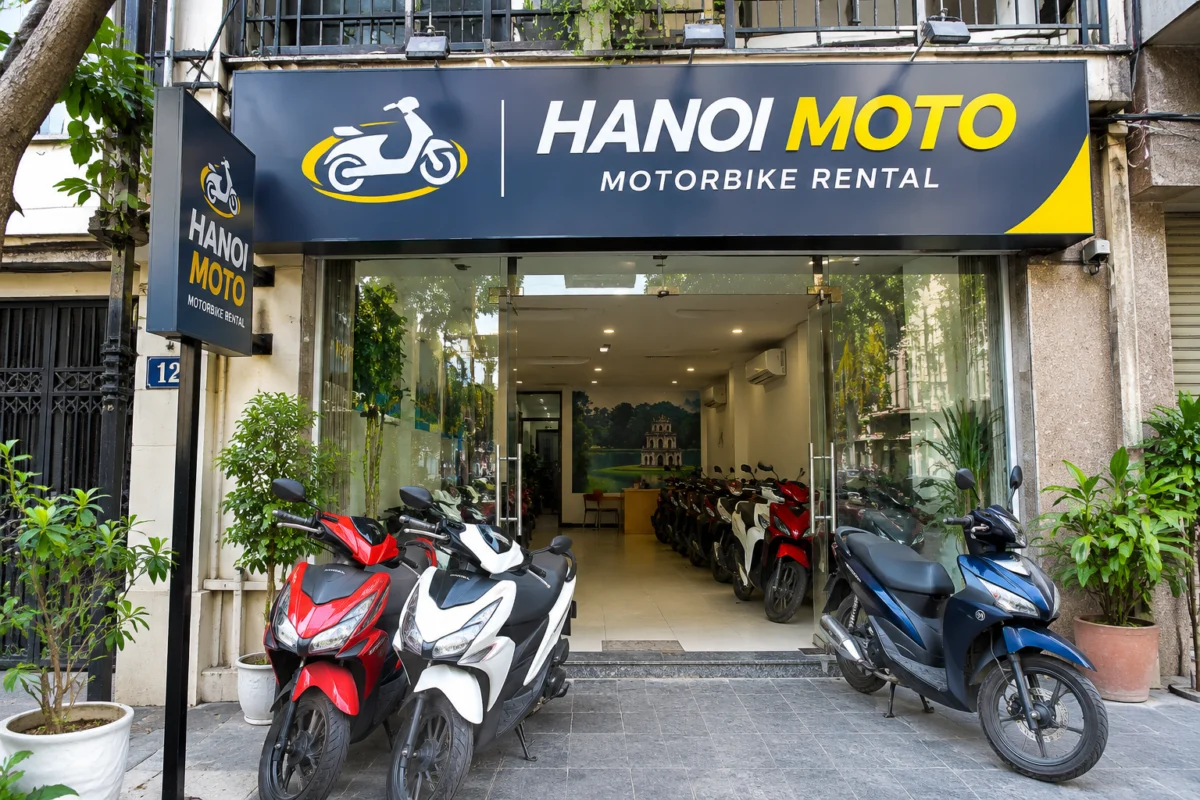
HANOI MOTO’s address, hours and contact details
The pickup premises are at 114 Nguyen Van Cu, Bo De Ward, Hanoi (the former Long Bien District), open 09:00 to 21:00 daily, with handover by appointment. Contact is by phone or Zalo, a Vietnamese messaging app, on +84 857 255 868, or by email at motoopen12@gmail.com. The pickup location page has more. The Google listing for the premises is shared under the name “Moto Open”, so match the address, hours and number rather than the name.
What to agree in writing with HANOI MOTO
Send HANOI MOTO the message from the payment section with your dates and preferred model. Availability is confirmed only by direct contact, so no bike is reserved until HANOI MOTO confirms it. The deposit is refunded under the agreement’s conditions at return; payment, documents, cancellation, extension, breakdown procedure and route permission are by agreement, so ask about what matters to you. There is no insurance package, so settle who bears the cost of damage or theft first. The refund and returns page covers deposit conditions, and the rental inquiry process shows how to start.
To check HANOI MOTO this way, send your dates, preferred model and questions through the HANOI MOTO contact page, on Zalo at +84 857 255 868 or by email to motoopen12@gmail.com, and ask for the total price, deposit and terms for those dates in writing.
Frequently asked questions
Is it a red flag if a shop asks for my passport as a deposit?
Treat it as a warning sign. UK government travel advice says not to use a passport as a vehicle deposit, and Decree 282/2025/ND-CP, Article 21(3)(b), fines pledging a passport, though its reach to rental deposits is unsettled. Ask whether a receipted cash deposit can replace it.
Should I pay a deposit before I have seen the bike?
Avoid it. Pay only after you have seen the bike and read the terms, and only against a receipt stating the amount and purpose. If a booking amount is needed, get its size and refundability in writing first.
What if the shop says I caused damage that was already there?
Ask for the claim in writing with photos and a repair quote or receipt, then compare it with your pickup photos and video. Damage in both sets predates you. Do not pay on the spot.
Are very cheap rentals more likely to be scams?
Not by themselves, and we found no reliable figures on how often scams occur. A low price is a reason to ask what the total includes; worry about one combined with prepayment, vague terms and a passport request.
Who can I complain to about a rental shop in Vietnam?
Start with the shop, in writing. The Vietnam Competition Commission’s free hotline, 1800.6838, advises on complaints, though we could not confirm it handles visitors’ rental disputes, so ask early. Report theft or a withheld document to the police (113 is the emergency number).
Sources and last checked
- UK Foreign, Commonwealth and Development Office, Vietnam travel advice: Safety and security and Getting help, accessed November 2026
- Australian Government, Smartraveller: Vietnam travel advice, accessed November 2026
- Vietnam Competition Commission, Consumer Support and Advisory Hotline System 1800.6838 and guidance on the 2023 Law on Consumer Protection, 25 July 2025, accessed November 2026
- LuatVietnam, Law on Protection of Consumer Rights No. 19/2023/QH15, English translation, accessed November 2026
- Thu Vien Phap Luat (LawNet), Circular 13/2025/TT-BCA, English translation and explainer on camera-fine procedure under Circular 73/2024/TT-BCA (Vietnamese), accessed November 2026
- LuatVietnam, Decree 282/2025/ND-CP, Vietnamese full text, accessed November 2026
- Thu Vien Phap Luat (LawNet), Decree 282/2025/ND-CP, unofficial English translation, accessed November 2026
- HANOI MOTO, owner-confirmed address, hours, contact details, rates and deposits (rates as of 31 October 2026; confirm when you book)
Part of the guide: Rental Documents, Licenses and Insurance Questions